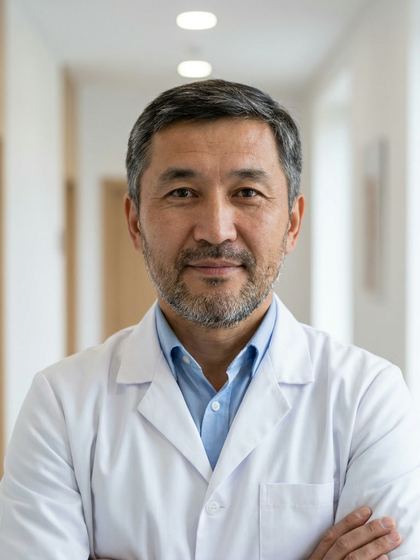
 Reviewed by: Askar Sarsenbayev, MD, addiction medicine physician · updated 6 Nov 2026
Key facts
- Who provides care
- An addiction medicine doctor, plus a psychiatrist if needed
- Format
- Anonymous video consultation, in-person stages when indicated
- Duration
- First session 40–60 minutes
- Anonymity
- No registration on the state addiction registry, medical confidentiality under the Kazakhstan Health Code
- When it’s urgent
- Overdose, seizures, psychosis, loss of consciousness — call 103 or 112
- Outcome
- A risk assessment and a personalized treatment pathway
What you should know
In ICD-10, dependence on psychoactive substances is described by codes F11–F19, depending on the substance: opioids, cannabinoids, stimulants, synthetic cathinones and sedatives. Each group has its own mechanism of action and its own withdrawal risks, so there is no universal “drug addiction course.” The doctor first finds out exactly what is being used, how often and for how long, and whether it is combined with alcohol or medications — the safety of every further step depends on this.
Many people put off seeking help for fear of others finding out. An online consultation at Psychiatry Online removes this barrier: there is no need to wait in a lobby or explain anything at a reception desk — a smartphone and a closed door are enough. This matters for people with demanding schedules in government agencies and companies on the left bank, and for parents who have discovered a problem in an adult son or daughter and don’t know where to start. The conversation can take place late in the evening, when the apartment is quiet.
Signs That You Need to See an Addiction Specialist
- substance use has become regular, and attempts to stop are unsuccessful
- without the substance, aches, anxiety, insomnia or low mood appear
- sharp mood swings, irritability and secrecy within the family
- money or belongings go missing, and debts appear without explanation
- the person has abandoned studies, work, old friends and hobbies
- there are episodes of suspiciousness, delusional ideas or hallucinations
- drugs are combined with alcohol or with medications not prescribed by a doctor
If heavy drinking has lasted more than two or three days, or there is shaking, vomiting, blood-pressure spikes or insomnia, you need a doctor rather than stopping alone. An online consultation is free and helps assess the risks before a visit. For seizures, confusion or hallucinations call 103 or 112.
How Addiction to Psychoactive Substances Develops
Most psychoactive substances sharply raise dopamine levels in the reward system — far more than natural rewards do. The brain adapts: the number of dopamine receptors decreases, everyday pleasures stop feeling enjoyable, and the substance becomes the only way to feel normal. At the same time, control by the prefrontal cortex weakens, and decisions increasingly give way to cravings.
The risk is higher in people with a hereditary predisposition, early onset of use, traumatic experiences, ADHD, and anxiety or depressive disorders. Clinical guidelines emphasize that co-occurring mental health conditions are common and need to be treated at the same time. Social isolation, a long winter with short daylight hours and a lack of familiar activities can also keep substance use going.
What Happens During an Online Consultation With an Addiction Specialist
The doctor asks structured questions: which substance, how it is used and how often, when it was last taken, and whether there have been overdoses, seizures or psychotic episodes. Mood, sleep, suicide risk and physical health are assessed. If a relative is the one reaching out, the conversation covers how to talk to the loved one and how to motivate them to get treatment. You will need a private room and a stable internet connection; the camera helps the doctor see the patient’s condition, but you do not have to give your name.
Detox, lab tests, an ECG and assessment of the veins and internal organs cannot be done online. Withdrawal from opioids, sedatives and some other substances requires medical supervision. If there are signs of an overdose, loss of consciousness, seizures, psychosis or thoughts of suicide, call 103 or 112 immediately.
How we help
Screening and Risk Assessment
At the first stage, standardized questionnaires and a clinical interview are used. The doctor determines the severity of the addiction, the risk of withdrawal syndrome and whether co-occurring disorders and physical complications are present. This makes it possible to choose a safe level of care — from outpatient online monitoring to hospital admission.
Medically Supervised Detox
Detox is the medical management of acute withdrawal symptoms. Depending on the substance and the patient’s condition, it is carried out in a hospital, a day hospital or at home with a visiting doctor. Medications are selected only after an in-person examination, and online follow-up helps track well-being, sleep and cravings during the first weeks after discharge.
Addiction Psychotherapy
Cognitive behavioral therapy, motivational interviewing and contingency management have the strongest evidence base. They help recognize triggers, cope with cravings and rebuild a daily routine. Online sessions fit easily into a work schedule, without unnecessary trips or asking for time off.
Rehabilitation and Social Reintegration
Once the acute state has been managed, many people need a long-term program — outpatient or at a rehabilitation center. The doctor helps choose the format based on the severity of the addiction, family support and living conditions, and continues online follow-up after the program ends to lower the risk of relapse during the first, most vulnerable months.
Myths and facts
Myth“Soft” drugs aren’t addictive
FactAddiction can develop to any psychoactive substance, including cannabinoids. The speed and severity differ, but the underlying rewiring of the reward system is the same. Regular use, especially at a young age, calls for an assessment by a specialist.
MythDrug addiction is incurable, so treatment is pointless
FactAddiction is a chronic disorder, but that does not mean treatment doesn’t work. As with other chronic conditions, the goal is long-term remission. A comprehensive approach with psychotherapy and support significantly increases the chances of a stable life without substances.
MythIf you seek help, you’ll be put on the registry and reported to the police
FactAn anonymous visit does not involve registration on the state psychoneurological or addiction dispensary registry. Medical confidentiality is protected by the Code of the Republic of Kazakhstan “On Public Health and the Healthcare System.” Information may be disclosed only in cases expressly provided for by law.
How an online appointment works
- Message or callWrite on WhatsApp or call — our coordinator replies within minutes, day or night. You don't have to give your surname.
- Doctor and timeWe match you with a psychiatrist, addiction specialist or psychotherapist and agree on a time — often the same day.
- Video consultationA secure 50–60 minute video call: the doctor takes a detailed history and uses standardised scales if needed.
- Treatment planYou receive a clear summary, recommendations and a plan: what we do online and what needs an in-person visit or home call.
- Follow-upOnline follow-up sessions, messenger contact with your doctor, and treatment adjustments until you get a stable result.
Prices in Astana
| Online addiction specialist consultation | 12 000 ₸ |
| Online addiction therapy session | 15 000 ₸ |
| Online support program (one month) | 80 000 ₸ |
The final cost is agreed before treatment starts. Prices are in tenge and do not constitute a public offer.
Where to get help
An online consultation for “Drug addiction treatment: online consultation” is available to people across Astana and Akmola Region 24/7 — from home, work or while travelling. For an in-person visit, Psychiatry Online in Astana has two branches: 72 Bogenbay batyra St., Astana and 37 Petrova St., office 23, Astana. Doctor home visits: all city districts and nearby settlements.
Confidential and private
An online appointment in Astana is first of all about privacy: no clinic visit, no waiting room. A private room and headphones are enough. Data is stored in a secure system with restricted access and does not enter any state registry without legal grounds.
Questions and answers
Can a relative book a consultation instead of the patient?
Yes. Many people start exactly this way: the doctor explains how to recognize addiction, how to talk to a loved one without blame and how to motivate them to seek treatment. Treatment of the patient themselves is possible only with their consent, except in cases provided for by Kazakhstan law.
Do I have to give my name at an online appointment?
For an initial consultation, you can remain anonymous. If in-person stages are needed, medical records are completed according to the rules, but the information is protected by medical confidentiality. The doctor will explain in advance what details will be required and why.
Can detox be done at home?
For some substances and mild withdrawal, yes — under the supervision of a visiting doctor. For opioid dependence, sedative use, mixed use and serious physical illnesses, a hospital is safer. The decision is made after a risk assessment, part of which is carried out during the video appointment.
How long does drug addiction treatment take?
The acute stage lasts from a few days to a couple of weeks. This is followed by long-term support — psychotherapy, rehabilitation and relapse prevention — lasting from several months to a year or longer. Regular online sessions help maintain remission without constant trips to the clinic.
What should I do if a loved one shows signs of an overdose?
Call 103 or 112 immediately. Lay the person on their side, check their breathing and do not leave them alone until the ambulance arrives. Do not try to revive them with cold water or other substances. Once emergency care has been provided, further treatment can be discussed with an addiction specialist.
Can I combine treatment with work?
In most cases, yes — especially at the outpatient stage. Online sessions are held in the morning, during a lunch break or in the evening. Office and government employees do not have to explain their absence, and video calls replace trips across the whole city in a snowstorm.
Where can I be seen in Astana?
Online — from anywhere in the city or region. In person — at two branches: 72 Bogenbay batyra St., Astana and 37 Petrova St., office 23, Astana. Both are open 24/7; home visits cover all city districts and nearby settlements.
Sources and methodology
This page was prepared by the Psychiatry Online medical editorial team based on:
- International Classification of Diseases ICD-10 and ICD-11, World Health Organization
- Clinical diagnosis and treatment protocols of the Ministry of Health of the Republic of Kazakhstan
- Code of the Republic of Kazakhstan “On Public Health and the Healthcare System”
- NICE (UK) and APA (US) guidelines on the treatment of mental disorders
- WHO recommendations on telemedicine and digital health
This information is for reference only and does not replace a consultation with a specialist. Editorial policy