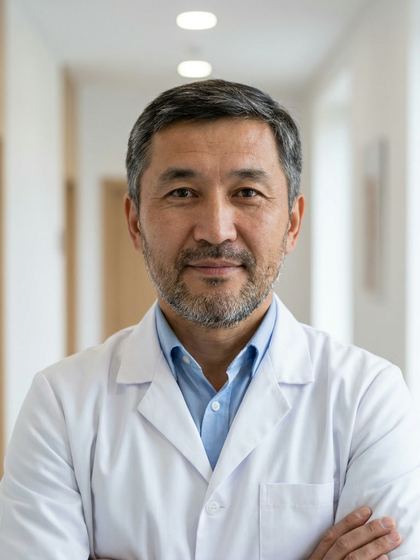
 Reviewed by: Askar Sarsenbayev, MD, addiction medicine physician · updated 6 Nov 2026
Key facts
- Who leads care
- a psychiatrist-narcologist (addiction specialist), with a psychotherapist when needed
- Format
- video consultation or audio call for the patient and family members
- Duration
- first appointment 30–50 minutes
- Confidentiality
- medical confidentiality under the Code of the Republic of Kazakhstan “On Public Health and the Healthcare System”, no registry entry
- When it is urgent
- overdose, seizures, hallucinations, loss of consciousness — call 103 or 112
- Outcome
- assessment of dependence and risks, a treatment plan and a route to in-person care if needed
What you should know
Disorders caused by the use of psychoactive substances are described in ICD-10 under categories F10–F19, while ICD-11 distinguishes harmful use and dependence syndrome for each group of substances, as well as gaming disorder as a behavioral addiction. Dependence is characterized by loss of control over use, giving the substance priority over other interests, and continuing to use despite harm.
Many people put off seeing an addiction specialist for years out of fear of exposure and stigma. An online addiction specialist consultation in Shymkent lets you discuss the situation confidentially, without visiting a facility and without being placed on the state psychoneurological or narcological dispensary registry. The doctor helps determine whether emergency care, detox at home or in hospital, outpatient treatment or psychotherapy is needed, and how to involve a loved one in treatment if they do not yet acknowledge the problem.
Reasons to See an Addiction Specialist
- using more often or in larger amounts than you intended
- unsuccessful attempts to cut down or stop using
- morning shakes, sweating and anxiety that go away after using the substance
- memory blackouts about events that happened while using
- problems at work, in the family or with the law because of substance use
- giving up former interests and a shrinking social circle
- loved ones worrying about your drinking, medication use or gambling
If heavy drinking has lasted more than two or three days, or there is shaking, vomiting, blood-pressure spikes or insomnia, you need a doctor rather than stopping alone. An online consultation is free and helps assess the risks before a visit. For seizures, confusion or hallucinations call 103 or 112.
How Addiction Develops
Addiction develops through an interaction of neurobiological, psychological and social factors. Psychoactive substances act on the brain’s reward system, and with regular use, tolerance, cravings and withdrawal syndrome develop. A hereditary predisposition significantly affects the risk but does not make addiction inevitable.
Psychological risk factors include anxiety and depressive disorders, ADHD, traumatic experiences and using substances to relieve tension. Social factors include the availability of substances, drinking or drug-use norms in one’s social circle, chronic stress and loneliness. Understanding these mechanisms makes it possible to see addiction as an illness that requires treatment rather than as a moral weakness.
How an Online Appointment With an Addiction Specialist Works
Before the consultation, it helps to write down which substances are used, how often and in what amounts, when the last use was, and what chronic illnesses and medications there are. The doctor asks about well-being, withdrawal symptoms, complications, mental state and motivation to change, and uses screening questionnaires if needed. An online addiction specialist consultation in Shymkent takes place over a secure channel; you can join without a camera if that makes the patient feel more comfortable.
Laboratory tests, a physical examination and emergency care cannot be provided remotely. If there are signs of an overdose, seizures, confusion, hallucinations or chest pain, call 103 or 112 immediately. Detox for significant withdrawal is carried out during a doctor’s home visit or in hospital. Alcohol “coding” (a treatment widely used in Kazakhstan and CIS countries) is possible only after an examination, while sober and with the patient’s informed consent.
How we help
Motivational counseling
Motivational interviewing helps a person weigh up the pros and cons of their substance use on their own and put into words their own reasons for change. The approach is included in international guidelines and is effective even when a person feels ambivalent. The online format is convenient for short follow-up meetings that help sustain the patient’s resolve.
Detox and withdrawal treatment
Withdrawal syndrome requires medical supervision and, when indicated, IV fluid therapy and medications from the relevant groups. Detox is carried out in person — at home during a doctor’s visit or in hospital if the condition is severe. The online addiction specialist carries out the initial assessment and determines which format is safe in each particular case.
Relapse prevention
This includes psychotherapy, medication support with specific groups of drugs that reduce cravings and, when indicated, coding as part of comprehensive treatment. All methods are used after an examination and with the patient’s consent. Prescribing and issuing prescriptions follow the legislation of the Republic of Kazakhstan.
Help for codependent family members
Families of people with addiction carry a heavy burden. The CRAFT approach, recommended when a loved one refuses treatment, teaches relatives to communicate effectively, reinforce sobriety and take care of themselves. Family consultations by video increase the likelihood that the person with addiction will agree to treatment.
Myths and facts
MythAddiction is a lack of willpower
FactAddiction is an illness involving changes in how the brain works, and it is recognized in international classifications. Willpower matters, but lasting remission usually requires medical care, psychotherapy and support from those around you.
MythIf you see an addiction specialist, you’ll end up on a registry
FactAn anonymous consultation does not involve being placed on a registry. All information is protected by medical confidentiality and is disclosed only in cases expressly provided for by Kazakhstan law, which the doctor can explain in advance.
MythYou can only help someone if they want help themselves
FactMotivation can develop during the process. Motivational counseling and training for family members increase readiness for treatment even in people who initially deny there is a problem.
How an online appointment works
- Message or callWrite on WhatsApp or call — our coordinator replies within minutes, day or night. You don't have to give your surname.
- Doctor and timeWe match you with a psychiatrist, addiction specialist or psychotherapist and agree on a time — often the same day.
- Video consultationA secure 50–60 minute video call: the doctor takes a detailed history and uses standardised scales if needed.
- Treatment planYou receive a clear summary, recommendations and a plan: what we do online and what needs an in-person visit or home call.
- Follow-upOnline follow-up sessions, messenger contact with your doctor, and treatment adjustments until you get a stable result.
Prices in Shymkent
| Online addiction specialist consultation | 12 000 ₸ |
| Online consultation for relatives | 12 000 ₸ |
| Addiction specialist home visit | 40 000 ₸ |
The final cost is agreed before treatment starts. Prices are in tenge and do not constitute a public offer.
Where to get help
Psychiatry Online in Shymkent: same-day video appointments and two branches for in-person visits — 108 Abaya Ave., Shymkent and 126 Esimova St., Shymkent. Our mobile team works around the clock: all city districts and nearby settlements. If you live elsewhere in Shymkent and Turkistan Region, starting online is usually easiest.
Confidential and private
An online appointment in Shymkent is first of all about privacy: no clinic visit, no waiting room. A private room and headphones are enough. Data is stored in a secure system with restricted access and does not enter any state registry without legal grounds.
Questions and answers
Can an online addiction specialist make a diagnosis?
The doctor can conduct a clinical interview and form a preliminary conclusion about harmful use or dependence. A full assessment of health and the choice of treatment usually require an in-person examination and lab tests, which the doctor recommends after the appointment.
Can I reach out on behalf of a relative?
Yes. The addiction specialist will help assess the situation from your description, advise you on how to talk to your loved one about treatment and what to do if their condition gets worse. Consultations at Psychiatry Online for family members are anonymous and available at any time of day or night.
Does an addiction specialist prescribe medication online?
Prescribing and issuing prescriptions depend on the group of medication and on the requirements of Kazakhstan law regarding an initial examination. Some medications are prescribed only in person. The doctor explains what steps are possible after a video appointment and does not promise a prescription after a short call.
Do I need to be sober for the consultation?
It is preferable for the patient to be able to hold a conversation. If the person is intoxicated, the conversation can be held with family members. If there are threatening symptoms — confusion, seizures, breathing problems — call 103 or 112 right away.
Does an addiction specialist help with gambling addiction?
Yes. Gambling disorder is a behavioral addiction, and it is treated with cognitive behavioral therapy, motivational counseling and work on the financial and family consequences. The online format is well suited to this work.
What does anonymous treatment mean?
It means seeking help without showing identity documents and without any information being passed on to outside organizations. Patients in Shymkent can give only a first name for communication. Medical confidentiality is maintained, with exceptions possible only in cases provided for by Kazakhstan law.
Where can I be seen in Shymkent?
Online — from anywhere in the city or region. In person — at two branches: 108 Abaya Ave., Shymkent and 126 Esimova St., Shymkent. Both are open 24/7; home visits cover all city districts and nearby settlements.
Sources and methodology
This page was prepared by the Psychiatry Online medical editorial team based on:
- International Classification of Diseases ICD-10 and ICD-11, World Health Organization
- Clinical diagnosis and treatment protocols of the Ministry of Health of the Republic of Kazakhstan
- Code of the Republic of Kazakhstan “On Public Health and the Healthcare System”
- NICE (UK) and APA (US) guidelines on the treatment of mental disorders
- WHO recommendations on telemedicine and digital health
This information is for reference only and does not replace a consultation with a specialist. Editorial policy